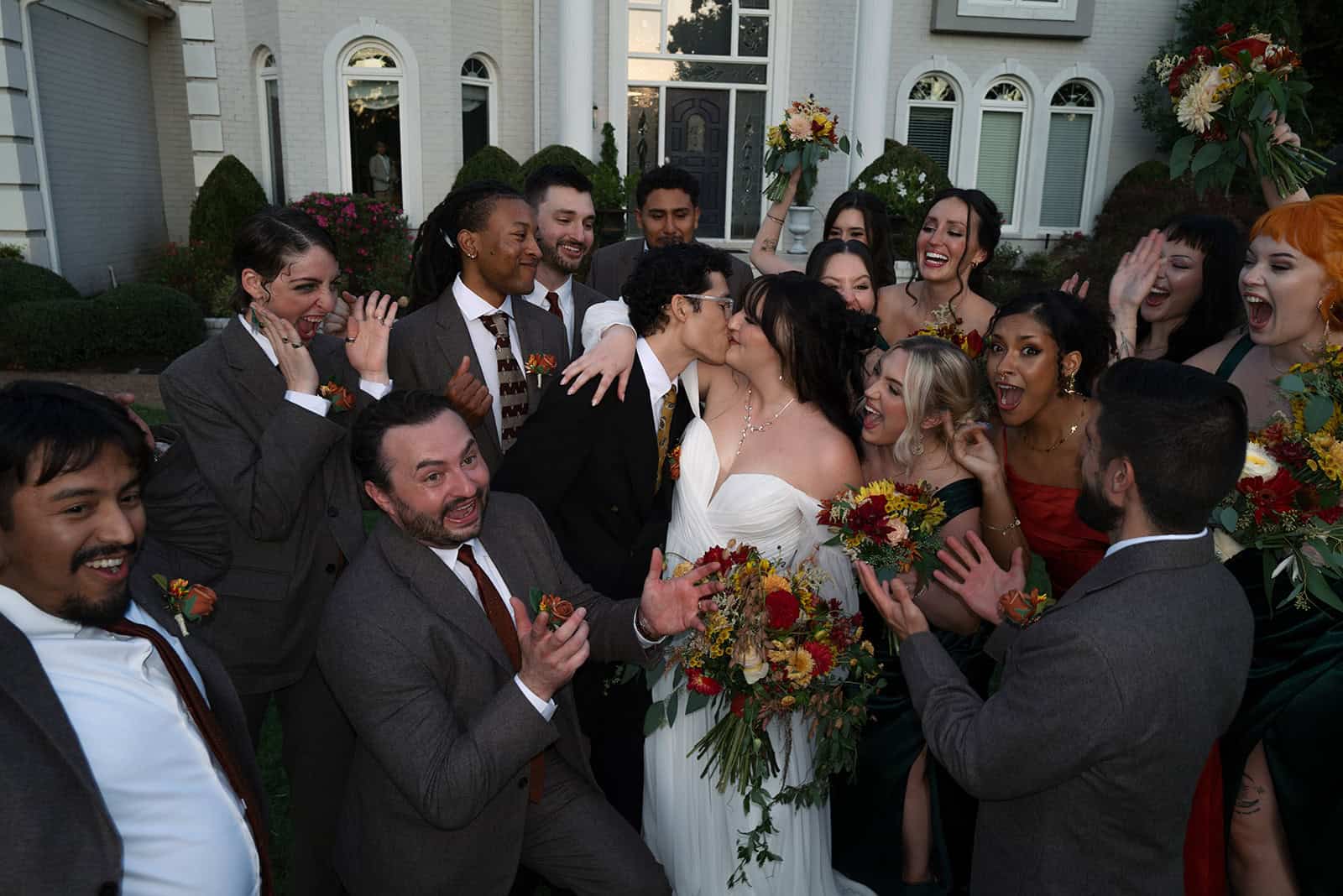
Why Fall Is the Most Underrated Wedding Season (And What to Know Before You Book One)
Spring gets the flowers.
Summer gets the long evenings.
But fall?
Fall might quietly be one of the best wedding seasons of them all.
There’s something different about a wedding once the air starts cooling and the light begins to soften. Outdoor ceremonies become more comfortable. Candlelight feels a little warmer. Dinner under string lights suddenly feels exactly right.
And especially here in Tennessee, fall can create the kind of atmosphere couples spend months trying to design.
But planning a fall wedding also comes with its own set of considerations.
Shorter days affect photography. Temperatures can change quickly. Popular weekends can be incredibly competitive. And an outdoor wedding in October requires a slightly different contingency plan than one in May.
So if you’re considering a fall wedding, here’s what makes the season so special—and what I want you to know before choosing your date.
Fall Weddings Have an Atmosphere You Can’t Manufacture

There are certain things we can create through wedding design.
We can bring in beautiful florals.
We can transform a space with lighting.
We can layer linens, rentals, stationery, and details to completely change the feeling of a room.
But atmosphere?
Some of that comes from the season itself.
Fall brings softer light, cooler evenings, changing foliage, and that unmistakable feeling that comes when summer begins giving way to something cozier.
It can make an outdoor ceremony feel intimate without needing to add much at all.
And the season doesn’t mean your wedding has to be filled with orange leaves, pumpkins, or rustic décor.
A fall wedding can be romantic.
Modern.
European-inspired.
Colorful.
Black tie.
Minimal.
The season should complement your design—not dictate it.
The Weather Can Be Incredible…But You Still Need a Plan B

One of the biggest reasons couples love fall weddings is obvious:
The temperature.
After months of Tennessee heat and humidity, the possibility of a crisp afternoon ceremony sounds pretty wonderful.
And it absolutely can be.
But fall weather isn’t guaranteed.
A beautiful 72-degree afternoon can become a surprisingly chilly evening. Rain can arrive. Wind can change how an outdoor ceremony setup functions.
That’s why I never want a couple’s backup plan to be something we reluctantly figure out three days before the wedding.
Your rain plan should be something you’re genuinely comfortable with from the beginning.
Before booking an outdoor-focused venue, ask:
- What happens if it rains?
- Where does the ceremony move?
- Can cocktail hour move indoors?
- Is the indoor backup space large enough for our guest count?
- Who makes the final weather call?
- When does that decision need to be made?
- Will rentals or layouts change if we move indoors?
A great Plan B doesn’t mean you’re expecting bad weather.
It means bad weather doesn’t get to ruin your wedding.
Pay Attention to Sunset Before You Choose Your Ceremony Time

This is one of those little planning details that can have a surprisingly big impact.
The days get shorter quickly in the fall.
A ceremony time that works beautifully in June may leave a photographer racing against darkness in late October or November.
And if you’re dreaming of portraits filled with that gorgeous golden fall light, your ceremony timeline needs to protect it.
Your photographer and planner can work backward from sunset to determine when your ceremony, family portraits, wedding-party photos, and couple portraits should happen.
This becomes even more important if you’re getting married in one location and holding the reception somewhere else.
Ten minutes here and fifteen minutes there add up quickly when daylight is limited.
Fall Is Popular for a Reason—So Don’t Assume You’ll Have Better Availability

There’s a misconception that fall is somehow the alternative wedding season.
In many markets, it’s anything but.
Particularly in the South, couples often gravitate toward fall precisely because temperatures are more comfortable than they are during the height of summer.
That means desirable Saturdays can disappear quickly.
Venues, planners, photographers, entertainment, florists, and other vendors can book popular dates well in advance.
So while fall can sometimes open possibilities that peak spring dates don’t, I wouldn’t choose an autumn date assuming you’ll automatically have your pick of vendors.
If there’s a particular team you want, start the conversation early.
Think About the Entire Guest Experience

Fall is wonderful for creating experiences that move naturally between indoor and outdoor spaces.
Maybe guests arrive for an outdoor ceremony, move onto a patio for cocktails, and finish the evening inside for dinner and dancing.
Or perhaps the entire celebration happens outdoors beneath lights and candles.
Either way, think beyond how everything will photograph.
Think about how it will feel.
If temperatures drop after sunset, are heaters available?
Would a basket of wraps or blankets make sense?
Are elderly guests walking a long distance between spaces?
Will guests know that part of the celebration is outdoors so they can dress accordingly?
Could you offer a warm late-night drink or espresso as temperatures cool?
None of these details need to be extravagant.
Great hospitality is often about anticipating what someone might need before they have to ask.
You Don’t Have to Use “Fall Colors”

Please hear me on this one.
Getting married in October does not mean your wedding needs to look like October.
If burgundy, burnt orange, and mustard aren’t your colors, don’t use them.
Fall provides a beautiful backdrop for palettes like:
- ivory and green
- chocolate and cream
- blush and plum
- champagne and black
- dusty blue and warm neutrals
- deep green and white
- soft mauve and taupe
You can acknowledge the season through texture, lighting, food, florals, or atmosphere without turning the entire wedding into a fall theme.
Your wedding should still feel like you.
Lean Into What the Season Does
Rather than fighting the season, use it.
Fall is incredible for layering.
Candles become more dramatic as daylight fades earlier.
Rich fabrics and textures feel natural.
Seasonal ingredients can make your menu memorable.
Outdoor cocktail hours become more comfortable.
Late-night espresso, warm desserts, and candlelit dinners feel particularly inviting.
Even your florals can take advantage of seasonal movement and texture without becoming overtly autumnal.
The goal isn’t necessarily to create a “fall wedding.”
It’s to create your wedding—and let fall make it even better.
Give Yourself a Little More Timeline Buffer
Fall weddings are a perfect example of why wedding timelines shouldn’t simply be copied from the internet.
If daylight is limited, timing matters.
If guests are moving between indoor and outdoor spaces, transitions matter.
If temperatures are expected to drop dramatically after sunset, timing matters.
If weather could require a ceremony flip, timing really matters.
A thoughtful wedding timeline considers all of those moving pieces together rather than treating the ceremony, photos, dinner, and reception as separate events.
That’s what allows the day to feel effortless to your guests even when quite a bit is happening behind the scenes.
Fall Weddings Can Create an Incredible Guest Experience

This may be my favorite argument for fall.
Guests aren’t necessarily arriving already exhausted from the heat.
Outdoor cocktail hours can actually be enjoyable.
People want to linger over dinner.
The atmosphere naturally encourages everyone to settle in and stay awhile.
And when you combine that with thoughtful food, comfortable spaces, great entertainment, and a timeline that never makes guests wonder what they’re supposed to be doing?
You get the kind of wedding people continue talking about long after it’s over.
Because ultimately, a memorable wedding isn’t just about what your guests saw.
It’s about how they felt while they were there.
Is a Fall Wedding Right for You?
If you love beautiful light, cooler temperatures, layered design, outdoor spaces, and an atmosphere that feels naturally intimate, fall may be exactly what you’re looking for.
Just don’t choose the season based on aesthetics alone.
Look at sunset.
Talk about weather contingencies.
Consider your guests.
Research vendor availability.
And make sure the venue works just as beautifully if Mother Nature decides not to cooperate.
Those practical decisions are what give you the freedom to enjoy all the beautiful parts.
Planning a Fall Wedding?
At Bella Poggio Events, I help couples think beyond how their wedding will look and consider how the entire celebration will actually work and feel—from the first guest’s arrival through the last dance.
If you’re considering a fall wedding and aren’t sure where to begin, I’d love to help you think through the season, venue, vendor team, timeline, design, and all the little details that turn an autumn date into an incredible celebration.
Because fall can be absolutely magical.
You just need to plan for everything that comes with it. 💛
Photo Credit: Andi Cunningham Photo and Film
Leave a Reply